Input/Output
June 20, 2022 · Company Building
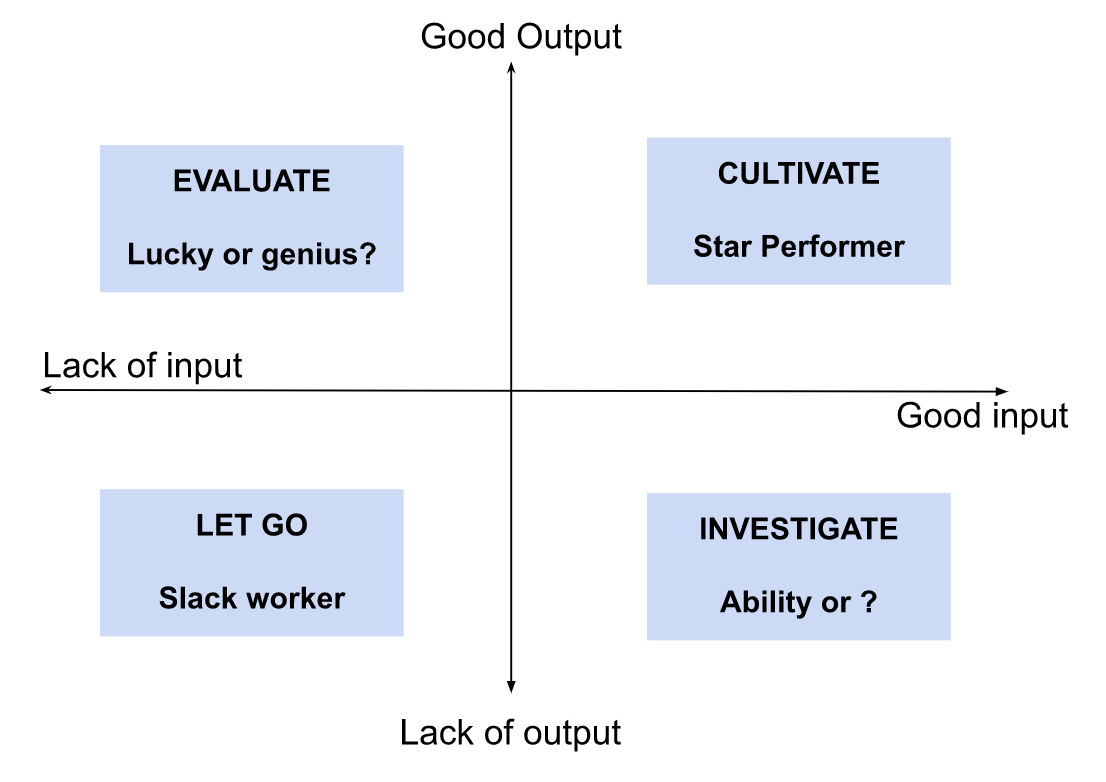
From a young age, I've derived my happiness from how hard I worked toward a goal, not necessarily the result — from the input, not the output. That came from my family's value system, rooted in a simple idea: do the work, don't hope for the results. It let me be intellectually honest about my work and stay optimistic, since the outcome wouldn't bother me either way.
When I started leading teams, I tried to apply the same philosophy — evaluate people on the input they put in, not just the output. A few months in, it was a disaster. I discovered almost every manager runs into this input-output paradox: good input and good output is the dream; good output with little input might just be luck (or genius); little input and little output needs immediate, empathetic action; and good input with poor output is the hardest case — investigating whether it's ability, unclear goals, or something else, since firing a hard worker is brutal.
A sales class at Stanford helped me land on my actual management philosophy: manage based on input, but compensate for the output. That keeps everyone focused on the input side of the matrix, where you can proactively manage them.